
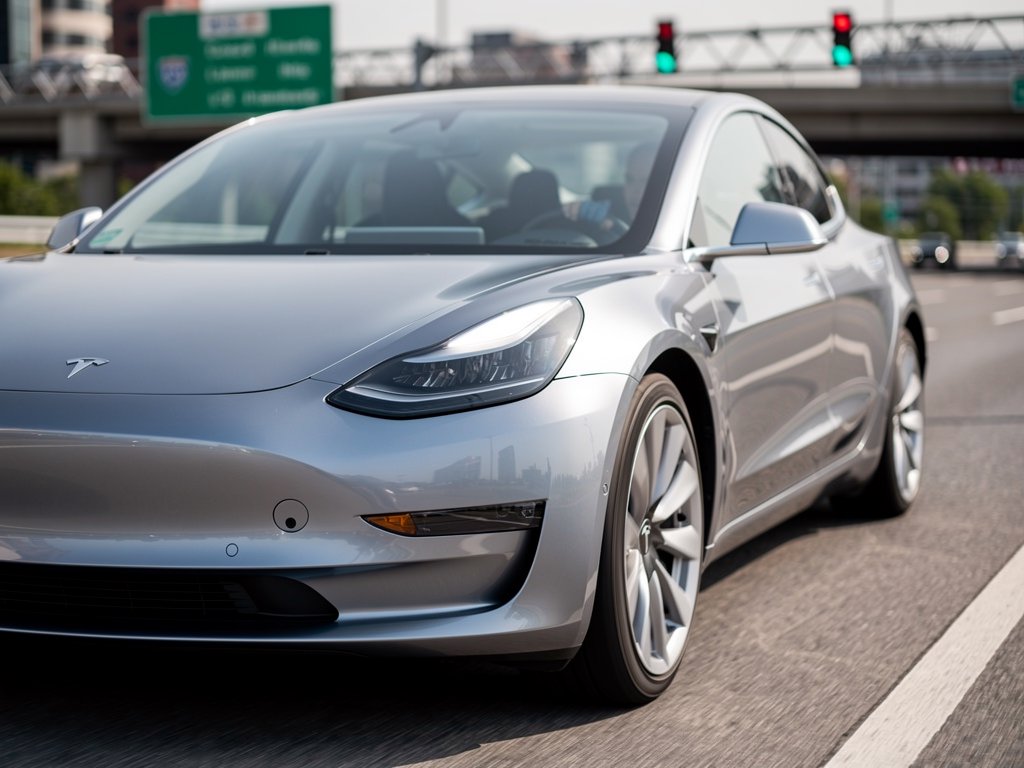
Tesla is recalling 218,868 U.S. vehicles after the National Highway Traffic Safety Administration flagged a software configuration bug that can leave the rearview camera display blank for up to 11 seconds after the driver shifts into reverse. The defect affects only HW3-equipped cars running firmware version 2026.8.6, and Tesla has already shipped the remedy as an over-the-air update labeled 2026.8.6.1. As of the NHTSA filing, 99.92% of the affected fleet had already received the patch (Tesla Issues OTA Recall for Delayed Rearview Camera Display).
Which Cars Are Affected
The recall covers a narrow slice of the fleet. Only vehicles equipped with Hardware 3 (HW3) and running the specific 2026.8.6 software build are in scope; HW4 cars and any HW3 car on a different firmware version are unaffected (Tesla to fix 219k vehicles in recall with simple software update).
| Model | Affected Model Years |
|---|---|
| Model 3 | 2017, 2021-2023 |
| Model Y | 2020-2023 |
| Model S | 2021-2023 |
| Model X | 2021-2023 |
The gap in Model 3 years is not a typo. The bug touches the original 2017 Model 3 production run and then re-emerges in 2021-2023 builds, with no 2018-2020 cars in scope.
How the Recall Got Filed and Fixed in One Day
The timeline is unusually compressed. Tesla engineers identified the camera-stream bug on April 10, 2026, and rolled out 2026.8.6.1 as an OTA the following day, April 11. Service centers were notified by May 7, 2026, and owner letters are scheduled to mail by July 3, 2026 (Tesla Fixes Rearview Camera Issue in 220,000 Vehicles with OTA Update).
The defect itself is a configuration mismatch that prevents the camera stream from reaching the MCU promptly when reverse is engaged. The screen stays blank for up to 11 seconds before the feed appears. That is well outside the regulatory window for a rearview camera display, which is the trigger for the NHTSA action.
Why This Counts as a Recall in 2026
Despite being fixed almost entirely before the public announcement, the event is formally a recall. Under U.S. regulations, any defect that creates an unreasonable safety risk must be filed with NHTSA, and the remedy must be documented — even when the remedy is a software push that has already reached most of the fleet. NHTSA has increasingly accepted OTA updates as a valid recall remedy, and Tesla has used this path repeatedly over the past several years (Tesla Recalls Nearly 219,000 Vehicles To Address Rearview Camera Display Issue).
The practical effect: no service visit, no parts, no downtime. The regulatory paperwork lags behind the fix.
What European Owners Should Know
This is a U.S. NHTSA filing, and no equivalent European regulator action has been opened to date. However, the affected firmware build runs globally, so European HW3 owners on 2026.8.6 were exposed to the same defect — and they received the same 2026.8.6.1 fix on the same global rollout schedule.
To check your car, open Controls > Software on the touchscreen. If your version reads 2026.8.6.1 or later, the patch is installed. If you are still on 2026.8.6, connect to Wi-Fi and the update should download automatically; otherwise contact your Tesla service center.