
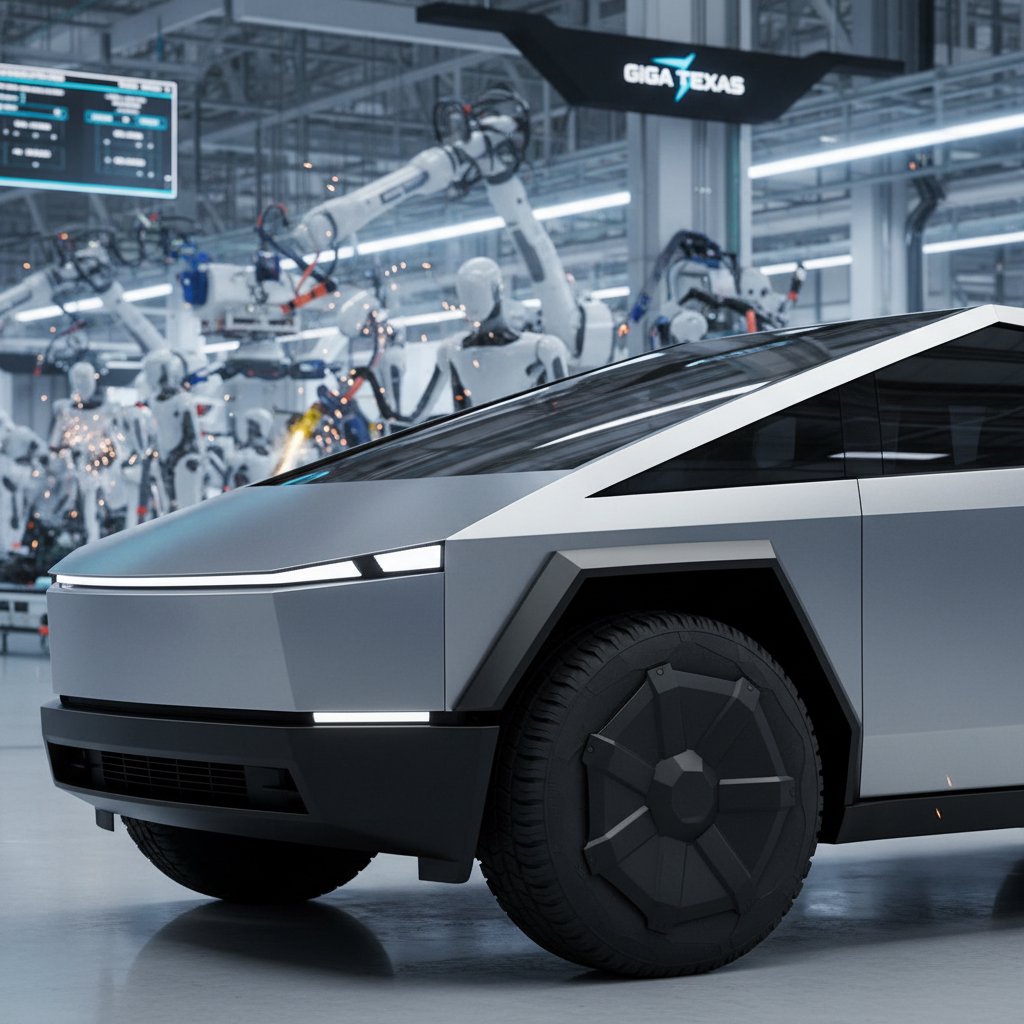
Tesla Sets Out the Scale of Its Optimus Bet
Tesla has confirmed in its Q1 2026 report and parallel permit filings that it plans to build a 5.2 million square foot expansion at Gigafactory Texas devoted to producing the Optimus humanoid robot. The long-term production target for the new site is ten million Optimus units per year — a number that, if achieved, would dwarf any humanoid-robotics manufacturing operation ever attempted.
The scale alone reframes how investors and customers should read Tesla's product roadmap. A factory of that footprint is comparable to several full Gigafactories combined, dedicated to a product category that, at the time of writing, has not been delivered to a single external customer.
Construction, Cost, and Timing
Permit documentation cited by multiple outlets shows Tesla is seeking to add over 5.2 million square feet of new building space at the Giga Texas North Campus by the end of 2026. Industry estimates place the construction investment between $5 billion and $10 billion, depending on tooling and how aggressively Tesla automates the lines themselves.
Fremont continues to host a first-generation pilot line, where Tesla is targeting around one million Optimus units per year as a stepping stone. The Texas expansion is not a replacement for Fremont but the volume engine, with Fremont remaining the prototype and small-batch facility that feeds learnings into the larger build.
Why a Standalone Factory
Tesla has historically integrated robot and vehicle production where possible, but the Optimus footprint demands its own building. The product needs different fixturing, conveyors sized for a roughly human-shaped chassis, and dedicated assembly cells for the actuators, hands, and battery packs that make up the machine. Sharing space with a Model Y line would constrain both products.
The ten million per year target also implies an entirely different supply chain. Optimus actuators alone are projected by Tesla to require billions of components annually at full ramp, much of which the company plans to make in-house using techniques borrowed from vehicle assembly. The new Texas building will sit close to Tesla's battery and casting operations to share inputs.
A Product Without a Market — Yet
The headline number remains striking precisely because there is no proven external market for ten million humanoid robots a year. Tesla CEO Elon Musk has described Optimus as the company's largest long-term opportunity, and the Q1 report frames the robot as the central commercial product of the next decade.
For that thesis to clear, Tesla needs Optimus to land in factories, warehouses, and eventually homes at price points that justify replacing labour or augmenting it. The company has previously suggested a target unit price between $20,000 and $30,000, which, paired with ten million units a year, implies a top-line opportunity in the hundreds of billions of dollars annually. Whether the demand exists at that price is the open question.
What This Means for European Tesla Watchers
There is no European Optimus production planned at this stage; the entire build-out is concentrated in Texas. For European Tesla owners and observers, the more relevant signal is what the Optimus capex means for the rest of the portfolio: cars, charging, and FSD compete for the same engineering and capital pool, and a $5-10 billion factory build pulls real resources. The Berlin Gigafactory's recent push to add 1,000 jobs and lift Model Y output 20% suggests the vehicle business is not being neglected, but Optimus is now the largest physical commitment on Tesla's roadmap.