
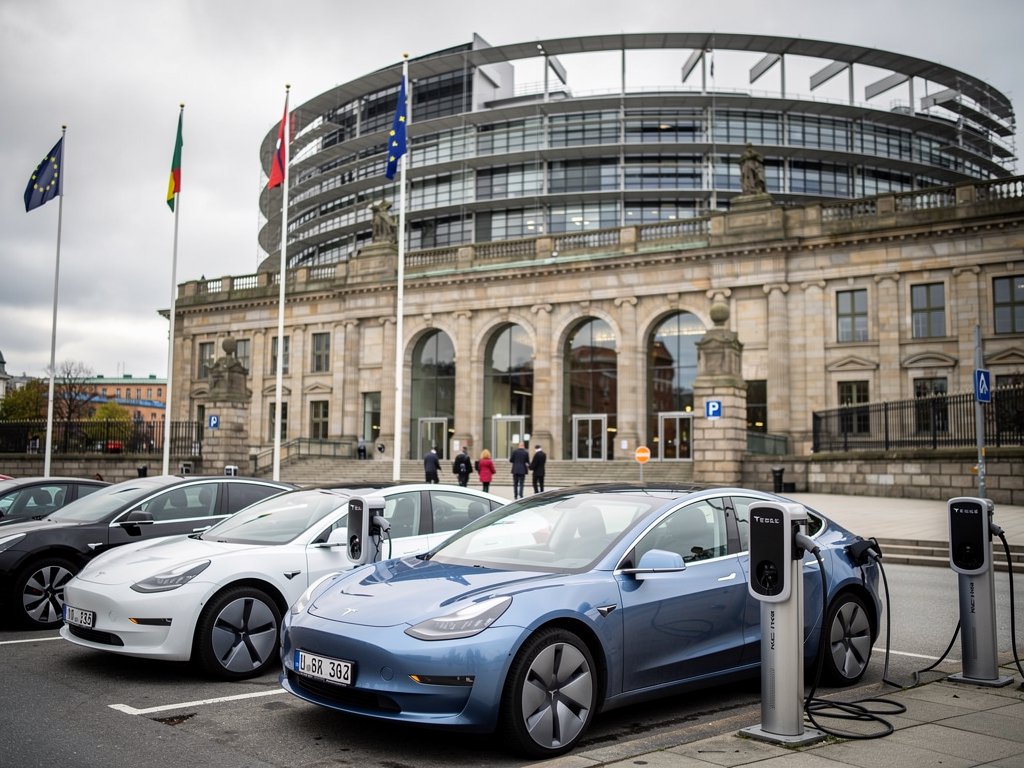
Norway's Supreme Court (Høyesterett) has refused to hear Tesla's appeal in the long-running battery throttling dispute, making the Borgarting Court of Appeal's earlier judgment final. The decision, reported on 21 April 2026, closes a legal battle that began in 2019 and turns a previous damages award for 115 Norwegian Model S owners into a binding obligation.
What the case was about
Owners of 2013-2015 Model S cars noticed, after a software update pushed in 2019, that their vehicles charged significantly slower on Superchargers and in some cases showed reduced usable capacity. Tesla argued the update was a safety measure, citing the need to protect older battery packs from the risk of fire. The plaintiffs called it a throttling that cut everyday usability and long-distance range, and filed for damages.
Lower courts sided with the owners, finding that Tesla should have informed customers about the practical effects of the update before deploying it. Each claimant was awarded 50,000 NOK in damages, with total direct compensation for the 115 plaintiffs in the case reaching around 5.75 million NOK. When legal costs are added, Tesla's bill for the dispute is expected to exceed 20 million NOK.
The Supreme Court step
Tesla asked Norway's Supreme Court to overturn the appeals ruling. The court's appeals committee has now declined to hear the case, which means the Borgarting Court of Appeal judgment stands and becomes legally enforceable. Tesla Norway has no further domestic route of appeal.
Why European owners should care
Norway is not an EU member, but its consumer law aligns closely with EU directives on digital content and software updates. Courts in other European markets regularly look at Norwegian precedents in EV cases because the country has the highest per-capita Tesla fleet in the world and the most mature case law on over-the-air vehicle updates.
The ruling strengthens a principle that is becoming central to European EV regulation: an OTA update that measurably reduces performance can be treated as a breach of the sales contract unless the customer is informed beforehand and agrees. The EU's own framework on software updates for vehicles, which entered force in 2022, already forces manufacturers to disclose functional changes — but this case shows how civil courts enforce the principle retrospectively.
Wider implications
Consumer organisations in Germany, the Netherlands, and Sweden have followed similar claims in recent years. Lawyers at European consumer groups have already said they will use the Borgarting judgment as a template for pending class actions in other countries, particularly around the 2019 and 2020 battery updates that affected older Model S and Model X packs.
Tesla has not commented on the Supreme Court's refusal. The company is expected to pay the damages and legal costs through its Norwegian subsidiary, and to settle with the 115 plaintiffs in the coming weeks.
What it means for owners
If you drive a 2013-2015 Model S in Europe and bought it new, check whether your country has a parallel case running — several law firms in Germany and the Netherlands are gathering plaintiffs. Keep service records and screenshots of charging speeds before and after software updates; they formed the central evidence in Norway.
For newer Tesla owners, the practical takeaway is smaller but real: Tesla is now under stronger legal pressure in Europe to document, in plain language, what each firmware release changes in battery or charging behaviour. Expect Tesla's release notes to grow more specific, and for new European consumer legislation to adopt the Norwegian approach.