
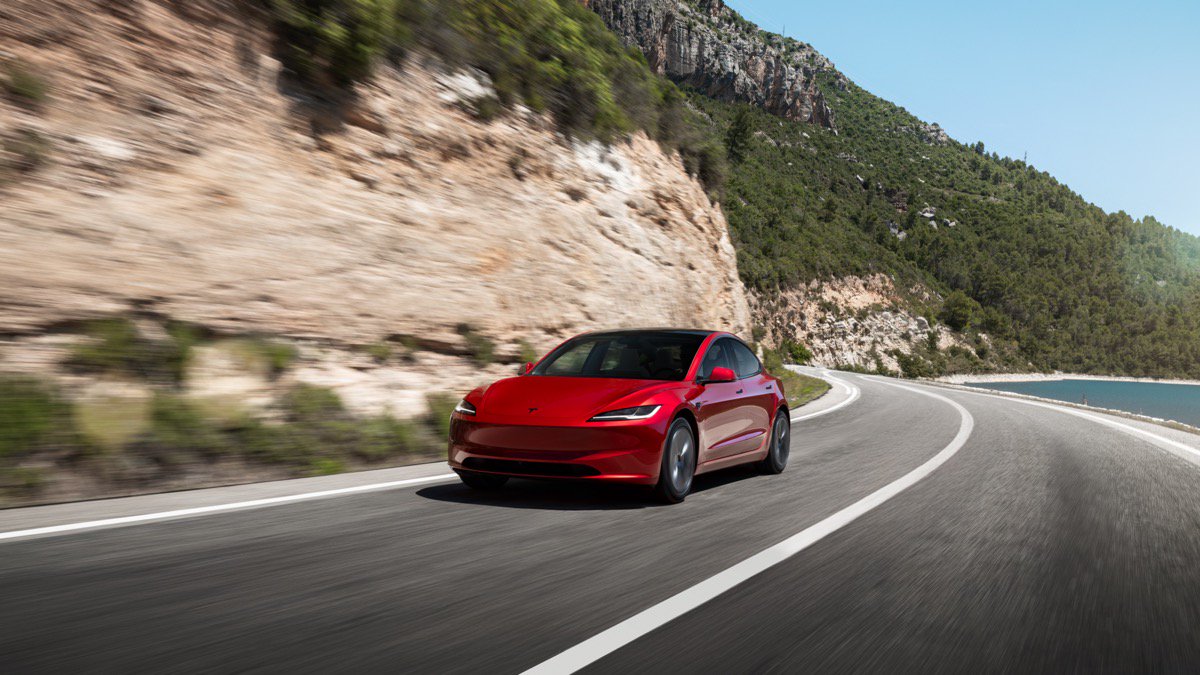
Tesla updated its Model 3 and Model Y configurators in early October with significantly improved WLTP range figures, driven by new battery packs with higher-density cells from LG Energy. The changes apply across all variants and come at no additional cost.
The Numbers
The standout is the Model 3 Long Range Rear-Wheel Drive, which jumps from 702 km to 750 km WLTP — a gain of 48 km that makes it one of the longest-range mass-market EVs available.
| Model / Variant | Previous Range | New Range | Gain |
|---|---|---|---|
| Model 3 Standard RWD | 513 km | 554 km | +41 km |
| Model 3 Long Range RWD | 702 km | 750 km | +48 km |
| Model 3 Performance | 528 km | 571 km | +43 km |
| Model Y Long Range AWD | 586 km | 629 km | +43 km |
Every variant gained at least 41 km. The improvements come from higher cell energy density rather than larger battery packs, meaning no change to weight or packaging.
What Else Changed
Beyond the battery upgrade, Tesla added a new front-facing camera with integrated wash and heating elements. In poor weather conditions — rain, snow, road spray — the camera can now clean and defog itself, which should improve the reliability of Autopilot and vision-based driver assistance in European winters.
The Model 3 also received a new physical turn signal lever, replacing the controversial capacitive buttons introduced with the Highland refresh.
Pricing Unchanged
Tesla held prices steady across both models: the Model 3 starts at €39,990 and the Model Y at €44,990 in Europe. Getting 7–48 km of extra range at the same price is a straightforward win for buyers, particularly for those cross-shopping against competitors like the Hyundai Ioniq 6 (up to 614 km) or the BMW iX3 (up to 461 km).
For existing owners, the battery upgrade is a reminder that Tesla’s continuous improvement cycle can deliver meaningful gains between model years — no new platform required.