
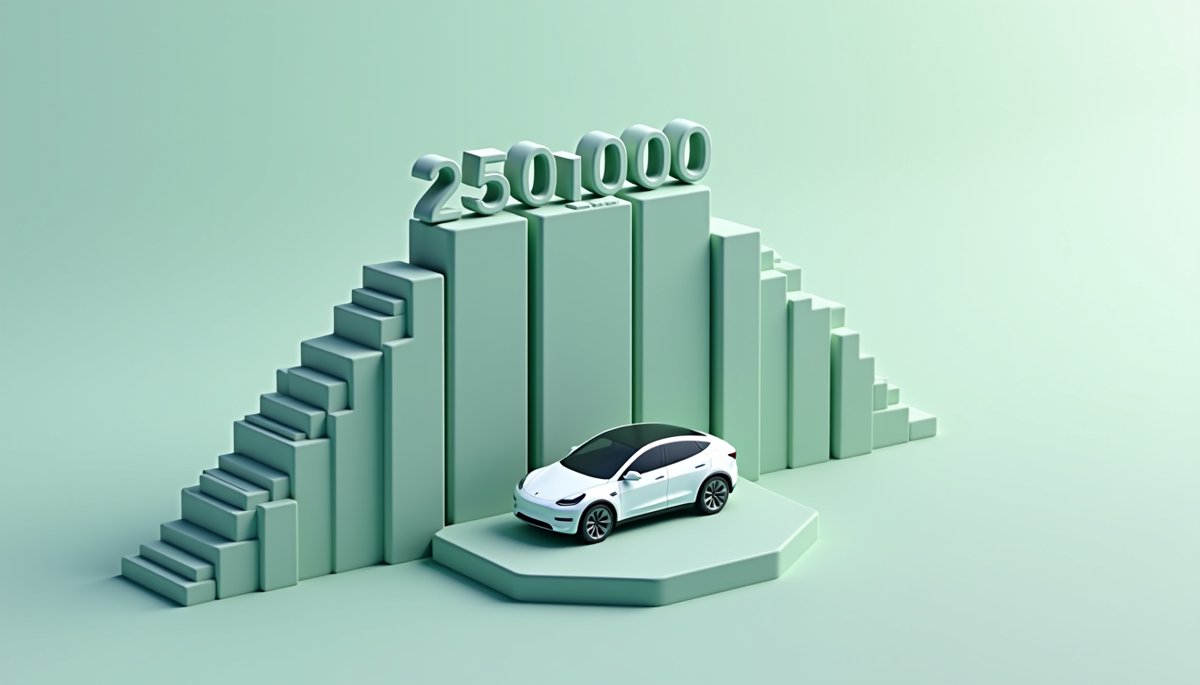
Tesla has landed near the top of a major durability study, ranking sixth among all car brands for the odds of a vehicle reaching 250,000 miles. The findings, published in June 2026 by automotive research firm iSeeCars, place the EV maker ahead of long-respected names including Subaru, Volvo, Mercedes-Benz, BMW and Porsche.
What the study found
iSeeCars analysed data from more than 174 million vehicles to estimate how likely each brand's cars are to cross the quarter-million-mile mark. Tesla scored a 4.6% chance, tying it with GMC for sixth place overall. That is nearly double Subaru's 2.3%, despite Subaru's reputation for longevity.
The top of the table is dominated by Japanese marques. Toyota leads with a 17.8% chance of its vehicles reaching 250,000 miles, followed by Lexus at 12.8%, with Honda and Acura also clearing the bar. Those four brands are the only ones to exceed the overall industry average of 4.8%.
| Brand | Chance of reaching 250,000 miles |
|---|---|
| Toyota | 17.8% |
| Lexus | 12.8% |
| Industry average | 4.8% |
| Tesla | 4.6% |
| Subaru | 2.3% |
An honest reading of the numbers
It is worth being precise: Tesla's 4.6% sits just below the 4.8% industry average that the leading Japanese brands pull upward. So while Tesla outlasts most premium and mainstream rivals in this analysis, it is not yet matching Toyota-grade longevity. What stands out is the company it keeps — Tesla finishes ahead of Cadillac, Mazda, Volvo, Mercedes, BMW and Porsche, brands typically associated with building cars that go the distance.
For a manufacturer that only began volume production in the past decade, ranking sixth is a strong result. iSeeCars analysts attribute the performance to the inherent simplicity of EV design: electric drivetrains have far fewer moving parts than combustion engines, with no transmission, timing belts, exhaust systems or oil-dependent components to wear out over time.
Why it matters for European owners
The study draws on US registration data, so the exact percentages reflect the American fleet. But the underlying conclusion travels: the same Model 3 and Model Y sold across Europe share the powertrains and construction that drive the durability ranking. For European buyers weighing a used Tesla, or wondering how a high-mileage example will hold up, the data offers reassurance that the drivetrain is built to last.
There is an important caveat, though. A longevity score measures how long a car stays on the road as a whole — it does not isolate battery degradation, which is the metric most prospective EV buyers actually care about. A Tesla can comfortably outlast a combustion rival on mechanical wear while still seeing usable range taper over many years and charge cycles. Repair costs after a collision and parts availability in a given country are likewise separate questions the study does not answer. The sensible takeaway is that the platform is durable; the specific battery health of any used example is still worth verifying with a range or state-of-health check before purchase.
As EVs accumulate real-world mileage, studies like this one start to replace speculation with evidence. On longevity, at least, the early data is working in Tesla's favour.