
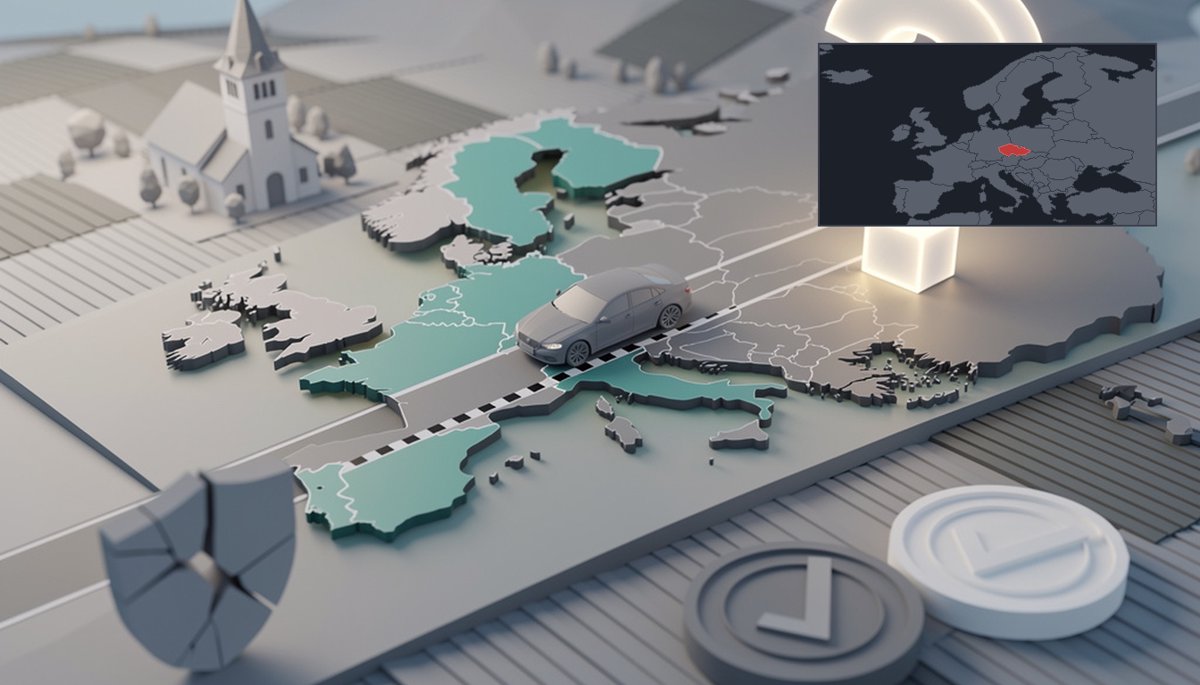
Czech Tesla owners hoping the Netherlands' landmark Full Self-Driving approval would quickly ripple across the continent have been given a clear answer: not yet. The Czech Ministry of Transport has confirmed it will not recognise the Dutch clearance of FSD Supervised on its own roads, and would rather wait for a coordinated European position than grant a national exemption Brussels might later unwind.
What the Netherlands actually approved
On 10 April 2026 the Dutch vehicle authority, the RDW, became the first regulator in the EU to type-approve FSD Supervised. It did so under UN Regulation 171 — the framework for what regulators call Driver Control Assistance Systems — paired with an exemption under Article 39 of Regulation (EU) 2018/858, the clause reserved for vehicle technology that does not yet fit the harmonised EU rulebook.
That combination is the crux of the dispute. An Article 39 exemption is a national provisional approval, not an EU-wide type approval, so it does not automatically carry over to other member states. Each country still has to decide whether to accept it.
Why Czechia is holding back
Prague's answer is to wait. The ministry has signalled it prefers a common European procedure to a patchwork of national sign-offs, putting Czechia alongside Germany, France, Italy and Spain — the larger markets that would rather see the EU move as a bloc.
The practical stakes in Czechia are still modest. Reporting on the ministry's position puts the number of cars that would use FSD Supervised at around 300, a small slice of the roughly 8,400 HW4-equipped Teslas registered in the country. The ministry has also made clear it does not intend to spend public money assessing what it frames as private testing, and says its own expert evaluation is still running.
What it means for Czech owners
For now, the feature stays locked in Czechia even for hardware-capable cars. Owners who paid for FSD cannot legally use its supervised driving functions on Czech roads until either the ministry changes its stance or the EU delivers the harmonised decision Prague is waiting for.
The timing hinges on Brussels. The relevant discussions run through the EU's Technical Committee for Motor Vehicles, and Czechia has tied its decision to that process rather than to the Dutch precedent. As TeslAnt has mapped across the continent, most of Europe is still queued behind the Netherlands, Lithuania and Estonia — and Czechia's stance is a reminder that mutual recognition is not automatic.
The optimistic reading is that once the EU accepts a single homologation file, approvals could cascade quickly through the shared type-approval system. The pessimistic one is that a bloc-wide consensus takes months longer than any single country acting alone. Either way, Czech drivers are now firmly in the second camp: waiting on Europe, not on Tesla.