
The drive
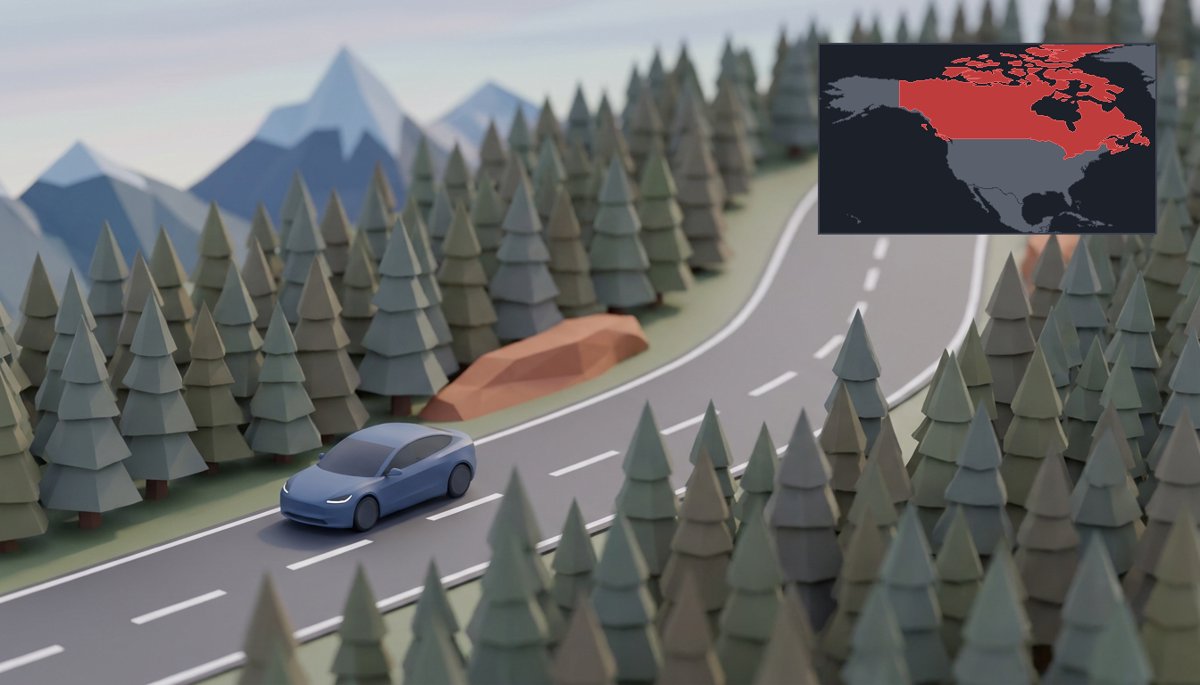
Three Tesla owners — David Moss, Devin Olsen, and Spencer — completed a coast-to-coast Canadian drive on Tesla FSD (Supervised) version 14.3.3 between 25 and 29 May 2026. The route started at the Horseshoe Bay Terminal in West Vancouver, British Columbia, and ended at the Tesla Showroom in Halifax, Nova Scotia, covering 3,760 miles (6,051 kilometres) in 4 days 21 hours.
A public tracker run by the team logged zero disengagements for the entire trip — including the Supercharger stops, where FSD navigated the car through the parking lot and into a charging stall without driver input.
The driver's seat was occupied at all times, with one of the trio supervising while the other two rode along; all three were on Starlink for live status sharing. As an SAE Level 2 system, FSD (Supervised) still requires a driver to remain attentive and able to take over — but on this drive, the driver did not need to.
Why this is bigger than "a long road trip"
Long autonomous-drive demonstrations have happened before — the Trans-Canada Supercharger route was completed manually in a Tesla as early as 2019, and individual provinces have seen multi-hundred-mile FSD runs throughout 2025. What makes this drive different is the combination of variables it survived without intervention:
- Rocky Mountain passes in BC and Alberta, including switchbacks and steep grades
- Prairie crosswinds through Saskatchewan and Manitoba
- The Canadian Shield north of Lake Superior — narrow two-lane stretches with poor lane markings
- Active construction zones flagged with traffic cones rather than permanent signage
- Bad weather including rain and reduced visibility
- Wildlife in the road — at least one moose-avoidance event was logged
- Supercharger lot navigation without driver assistance at parking-lot speeds
Earlier FSD demonstration drives across the United States have completed similar mileage, but the Canadian route concentrates more rural-road and harsh-weather miles per kilometre than the typical US east-west interstate run.
Tesla's reaction
Ashok Elluswamy, who runs the Autopilot and FSD software organisation, publicly congratulated the team. Max de Zegher, Tesla's Senior Director of Charging, framed it as a milestone: "Trans-Canada Supercharger route opened in 2019 and now driven coast-to-coast autonomously with FSD."
Neither comment was an official Tesla announcement, and Tesla has not used the drive to make any regulatory claim. FSD remains a Level 2 system in Canada and everywhere else outside Texas — the Texas Cybercab Level 4 self-certification is a separate, vehicle-specific category that does not extend to passenger-car FSD.
What it signals for FSD progress
The Canadian drive is consistent with what insurance data has been suggesting all year: the v14.x FSD branch has materially closed the gap between supervised demos and autonomous reliability on long-haul routes. Whether that translates into a near-term shift in regulatory approval timelines in Europe — see our reporting on the Estonia approval — depends on how individual national authorities weigh demonstration data versus their own test protocols.