
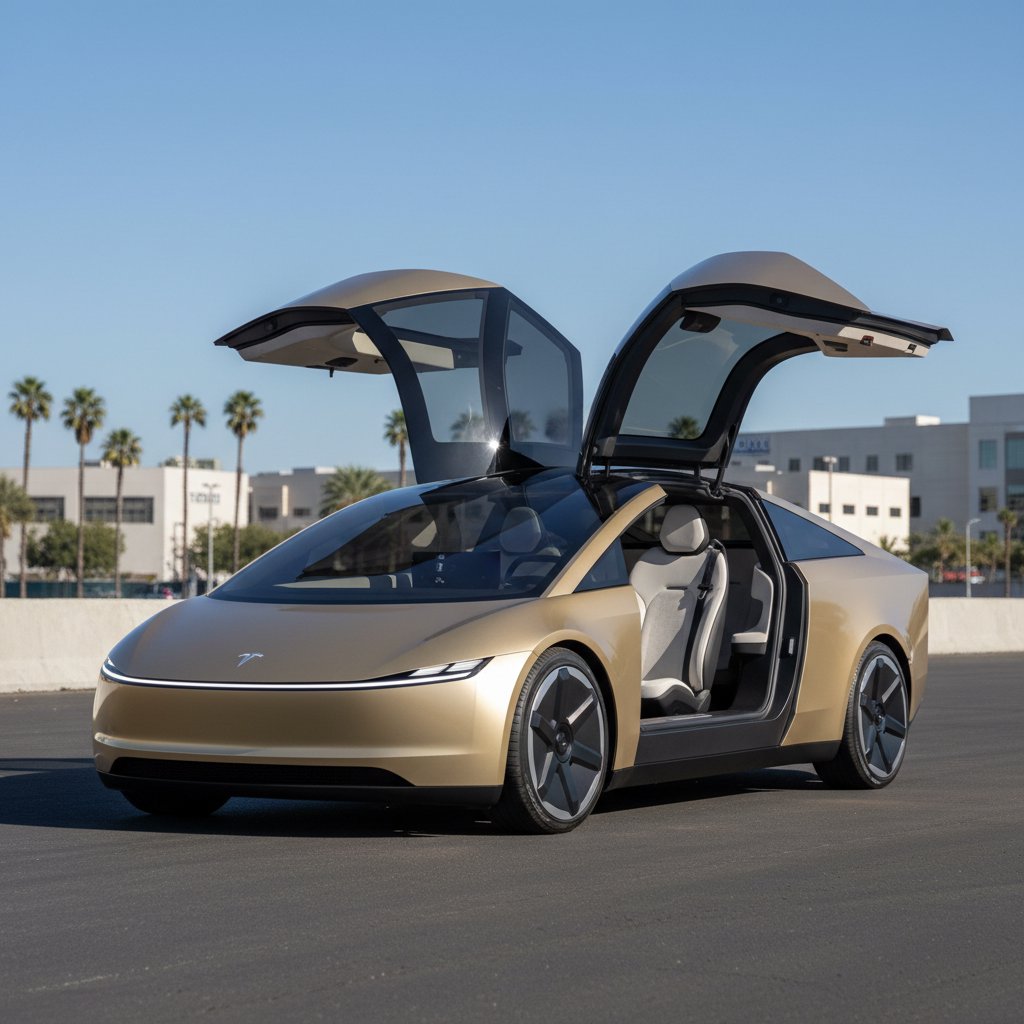
Tesla has filed a permit application with Clark County, Nevada, to build a dedicated Cybercab service facility in Las Vegas. The filing, dated 12 May 2026 and discovered in the county's public permit database by NotATeslaApp, describes the project as "Tesla Center Mohawk Cybercab Phase 2 Car Wash" at 6170 Mohawk Street. It is the first piece of purpose-built physical infrastructure ever filed for the two-seater Cybercab, and it confirms Tesla is preparing for a Robotaxi-only fleet that cannot just pull into a public car wash on its own.
What the Permit Describes
The permit covers interior and exterior improvements to an existing Tesla-owned facility on Mohawk Street, including:
- Construction of an enclosed automated car wash structure on the lot
- Relocation of an existing tire service bay
- Installation of new electrical raceways, consistent with significantly more on-site charging capacity
- Mechanical, plumbing and structural updates to support the new layout
The "Phase 2" label in the application suggests this is the second stage of a staged buildout — Phase 1 was likely a routine Tesla service centre conversion of the existing building. Phase 2 adds the Cybercab-specific equipment.
Why a Cybercab Needs Its Own Car Wash
The Cybercab, unveiled at Tesla's "We, Robot" event in October 2024, is the company's first vehicle designed from the start with no steering wheel, no pedals, and no human-accessible controls. It cannot be hand-washed by an attendant without putting it into a service mode, and it cannot drive itself through most public touchless car washes — the tunnel systems usually require a human to keep the car in neutral or to follow staff prompts on a touchscreen.
A Tesla-operated facility solves both: the Cybercab can drive itself in, the car wash hardware can interrogate the vehicle directly to confirm it's safe to start, and the whole loop fits inside the wider Robotaxi service cycle.
The co-located Supercharger is the other half of the picture. Public Superchargers are designed for human drivers — you pull in, plug in, watch the car charge, unplug, leave. A Robotaxi-only Supercharger can be wired differently: stalls can be reserved for fleet vehicles, pricing can be set internally, and the cars can queue and rotate without competing for stalls with retail customers. Multiple recent permit filings around Tesla service centres in the United States have hinted at this private, fleet-only Supercharger model.
Where the Cybercab Programme Stands
Tesla has shown the Cybercab only in carefully staged demonstrations to date. The first known public-road collision involving the vehicle — a low-speed rear-end during testing — was reported earlier in May 2026. Tesla has not announced a Las Vegas Robotaxi launch date, but the city has been a focus area for the company's autonomy work: the existing Tesla service network in southern Nevada is dense, and Nevada's regulatory framework for autonomous vehicles is among the most permissive in the United States.
Elon Musk has previously said volume Cybercab production will start at Giga Texas in 2026, with the first vehicles entering fleet service before retail. A Las Vegas pilot using the Mohawk Street hub would fit that pattern: a closed-loop, Tesla-controlled operating area where the cars can be fuelled, washed, and serviced without ever interacting with public infrastructure.
What European Readers Should Take From This
The Cybercab is not approved for European public roads, and Tesla has not indicated a European launch date. The Las Vegas filing matters to European readers as a preview of what Tesla's Robotaxi service model actually looks like in operation:
- Vehicles never visit a public dealership or third-party workshop
- All maintenance — including cleaning — happens inside dedicated Tesla hubs
- Charging is on a private network, not the retail Supercharger grid
When the Robotaxi service eventually arrives in Europe, it will almost certainly arrive city by city around purpose-built hubs of this kind — not as a service Tesla owners can opt into with their existing cars.