
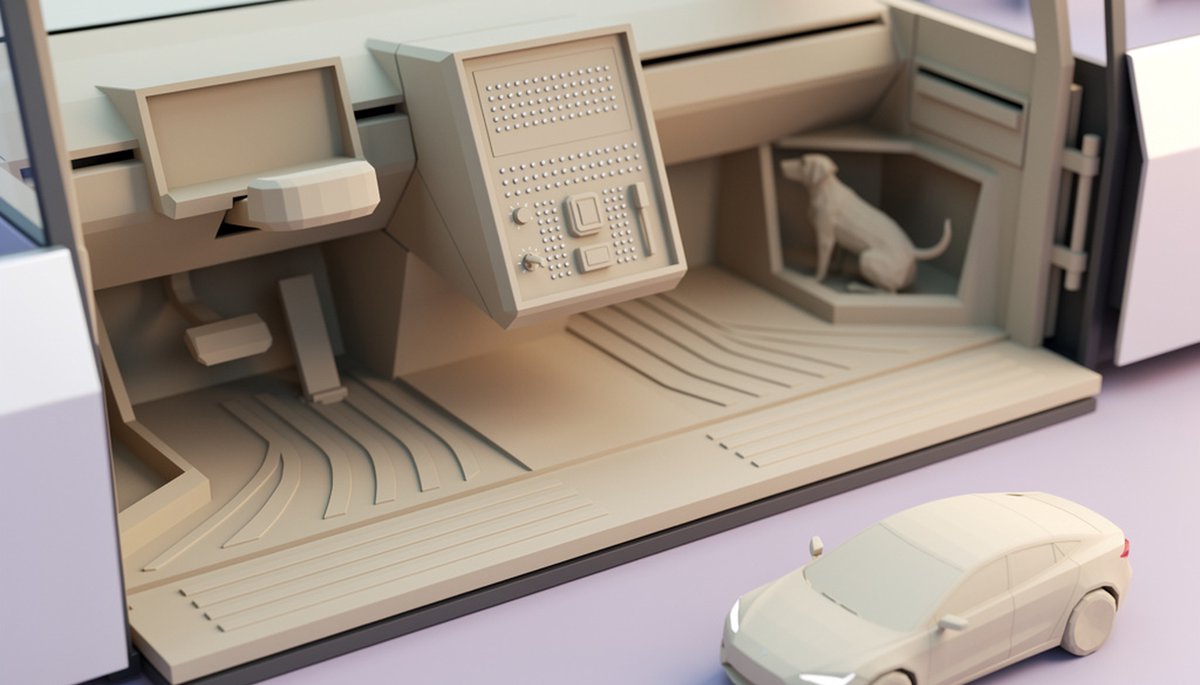
Tesla brought its driverless Cybercab to one of the most demanding audiences it could find: hundreds of blind and visually impaired travellers who navigate the world without relying on a screen or a glance at the road.
A hands-on test at the NFB convention
The demonstration took place on 3 July 2026 at the JW Marriott Austin, during the National Federation of the Blind's Annual Convention, which ran from 3 to 8 July. Attendees — many using white canes or accompanied by service dogs — were invited to board, sit in and exit the steering-wheel-free robotaxi for themselves, rather than watch a staged reveal.
That framing matters. A vehicle with no steering wheel and no pedals removes the driving task entirely, which is precisely what makes independent mobility possible for someone who cannot drive a conventional car. Putting the Cybercab in front of the people it is meant to serve, and collecting their feedback directly, is a more honest test than a press event.
The accessibility features on show
Tesla highlighted several design choices aimed squarely at non-visual use:
- Braille lettering on physical controls, including the door releases and the emergency-stop button, so a rider can locate and operate them by touch.
- Dedicated space for service animals and assistive devices such as folded canes.
- Wheelchair-height seating intended to make transfers into and out of the vehicle easier.
The goal, as Tesla framed it, is for a blind passenger to board, ride and leave the Cybercab entirely on their own — no sighted assistance required. Elon Musk said the robotaxi has to "meet the needs of the blind," positioning accessibility as a design requirement rather than an afterthought bolted on later.
Why this is more than a photo opportunity
Autonomous ride-hailing has always carried an implicit promise for people who cannot drive: independence on demand. But that promise only holds if the vehicle itself is usable without sight. Physical Braille labelling and tactile controls address a real gap — touchscreen-only interfaces are close to useless to a blind rider, and a car with no human driver has no one to point out the door handle.
If features like these become standard as the fleet scales through the rest of 2026, they could set a benchmark that rival robotaxi operators are measured against.
What it means for European readers
The Cybercab remains a US-focused robotaxi with no confirmed European sale, so this is not a product European buyers can order. It is, however, a useful preview of how autonomous mobility might eventually be judged here, where accessibility rules for public transport are strict and where an ageing population stands to gain from driverless options. The hardware underneath the Cybercab is a separate question, one TeslAnt covered in our look at the Cybercab's self-driving computer; the accessibility work is about who the vehicle is designed to carry, not what chip it runs.
For now, the takeaway is straightforward: Tesla is testing the Cybercab's accessibility with the community that will judge it most rigorously — and that is the right way to do it.