
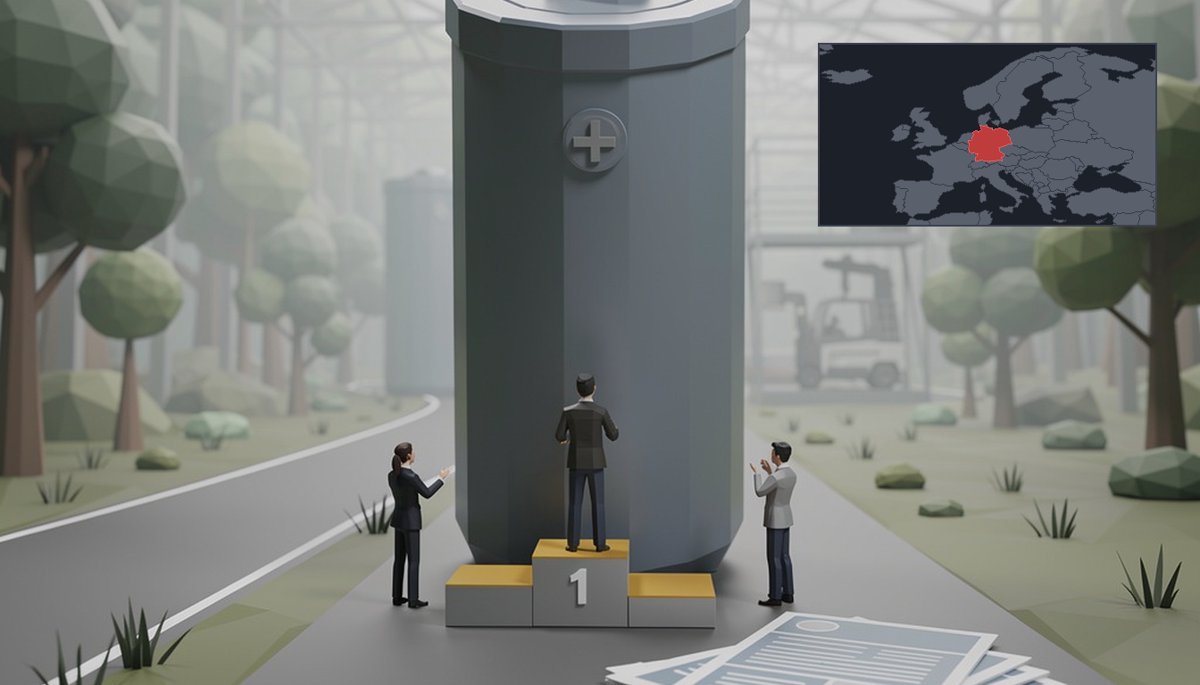
Tesla is opening the doors of its most advanced European factory to outside talent. Through a new programme called the JUNI x Tesla Battery Cell Giga Challenge, the company is inviting startups to bring proven battery-manufacturing technology directly to Gigafactory Berlin — and the best submissions could win a paid pilot with Tesla's own cell team.
What Tesla is asking for
The challenge targets startups whose solutions can make battery-cell manufacturing faster, cheaper, safer and more scalable at industrial volume. Applications opened this month and close on 24 July 2026. Tesla has organised the search around five categories: materials, equipment, operations, automation and artificial intelligence.
Crucially, this is not a hunt for concepts. Applicants must demonstrate working prototypes, test data or prior pilots to be considered. Submissions are screened directly by Tesla's cell-manufacturing team in Grünheide, and the strongest candidates move through technical discussions, a pitch day in front of Tesla stakeholders and — potentially — a paid pilot project with the cell team.
Scaling 4680 production in Grünheide
The programme is tied to an ambitious ramp of 4680 cell output at the German plant. On 12 May 2026, Giga Berlin plant manager André Thierig announced a $250 million investment to scale the factory's annual 4680 cell-production capacity from 8 GWh to 18 GWh — more than doubling a target that had itself only been set months earlier in December 2025.
| Detail | Figure |
|---|---|
| Current 4680 capacity target | 8 GWh/year |
| New capacity target | 18 GWh/year |
| Announced investment | $250 million |
| Application deadline | 24 July 2026 |
| Focus areas | Materials, equipment, operations, automation, AI |
Why open the doors to startups
By inviting external companies to compete, Tesla is effectively acknowledging that reaching 18 GWh at Grünheide will require technology it does not currently have in-house — and that it is willing to pay for the right solutions. For a battery-supply-chain startup, a paid pilot with Tesla's European cell team is about as direct a commercial path as the industry offers.
What it means for Europe
The move underlines how central Giga Berlin has become to Tesla's European strategy. The plant near Grünheide is not only the company's main vehicle factory on the continent but increasingly a cell-manufacturing hub, and 4680 cells are the format Tesla is betting on for lower-cost, higher-density packs. Building that supply chain inside Germany, rather than importing cells, also insulates Tesla's European production from tariff risk and shipping delays.
For European suppliers, engineers and battery startups, the challenge is a rare open invitation into one of the region's most closely watched manufacturing operations — and a signal that Tesla wants to source next-generation cell technology on the continent itself. Localising 4680 output matters for European owners too: cells made in Grünheide feed the Model Y built there, and a stronger domestic cell line supports Europe's wider push to reduce dependence on imported batteries.
Whether any of the pilots translate into long-term contracts remains to be seen, and Tesla has not said how many startups it expects to advance to the pilot stage. But by opening the process to outsiders, Tesla is signalling that the road to scaling its 4680 line in Germany runs partly through European innovation — not just its own engineering.