
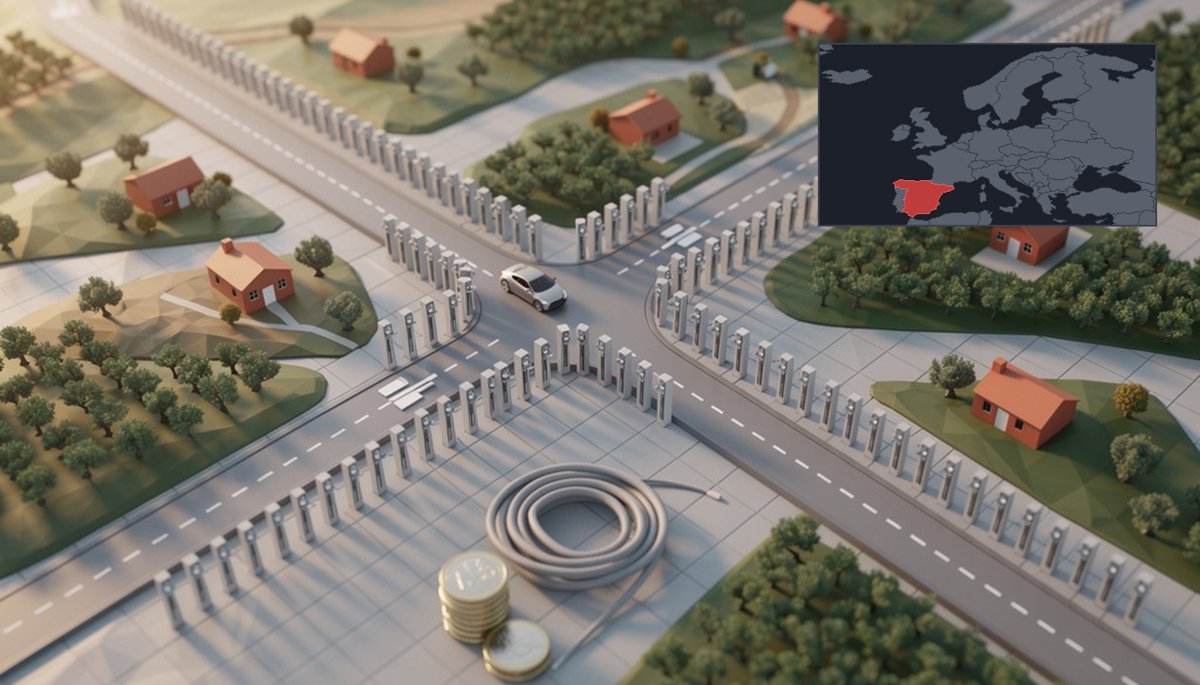
Spain is putting real money behind one of the biggest complaints from electric-car drivers on the Iberian peninsula: the long, empty stretches of motorway where a rapid charger is hard to find. The government has confirmed that more than €100 million will go toward electromobility projects, with the bulk aimed at building and modernising charging stations along the country's key transport corridors.
What the money buys
The funding is channelled through the 'Moves Corredores de Recarga' programme, run by Spain's IDAE energy agency, and is set to deliver close to 2,700 new fast-charging points on the routes that matter most for long-distance travel. The provisional allocation of roughly €97 million backs some 337 winning projects, with the chargers built to a 150 kW class that is genuinely useful for a quick top-up on a road trip rather than an overnight trickle.
Crucially, the plan targets the so-called 'shadow stretches' — the corridors where charging infrastructure today is weak, unreliable, or simply absent. Closing those gaps is what turns a nervous cross-country drive into an ordinary one.
Who is building it
The grants are spread across several established charge-point operators. The largest single award went to Wenea, which secured almost €14.8 million for 25 projects around the country. Zunder will receive roughly €13 million to develop 54 charging installations, and the Iberdrola–BP Pulse partnership took more than €12 million to build 41 charging hubs in locations including Málaga, León, Jaén, Cáceres, Toledo, and Badajoz.
| Operator | Funding | Projects |
|---|---|---|
| Wenea | ~€14.8M | 25 |
| Zunder | ~€13M | 54 |
| Iberdrola–BP Pulse | ~€12M | 41 hubs |
Why it matters for Tesla owners
Spain is one of Europe's most popular long-distance driving destinations, and its motorway network has historically lagged northern Europe on rapid-charging density. Tesla drivers already benefit from a dense Supercharger footprint along the Mediterranean coast, but a stronger public fast-charging backbone matters for two reasons: it fills the gaps between Superchargers on interior routes, and — because Tesla has opened much of its European network to other brands and increasingly relies on shared standards — a denser third-party corridor network reduces queueing and range anxiety for everyone.
The investment also fits a wider European pattern. Governments across the continent are pouring public money into corridor charging to meet the EU's AFIR rules, which require fast chargers at regular intervals along major highways. Spain's push is a concrete step toward those targets, and a sign that the country intends to keep pace as EV adoption accelerates.
For now the allocation is provisional, and the real test will be how quickly the 337 projects move from paper to poured concrete. But the direction of travel is clear: Spain wants its corridors charged.