
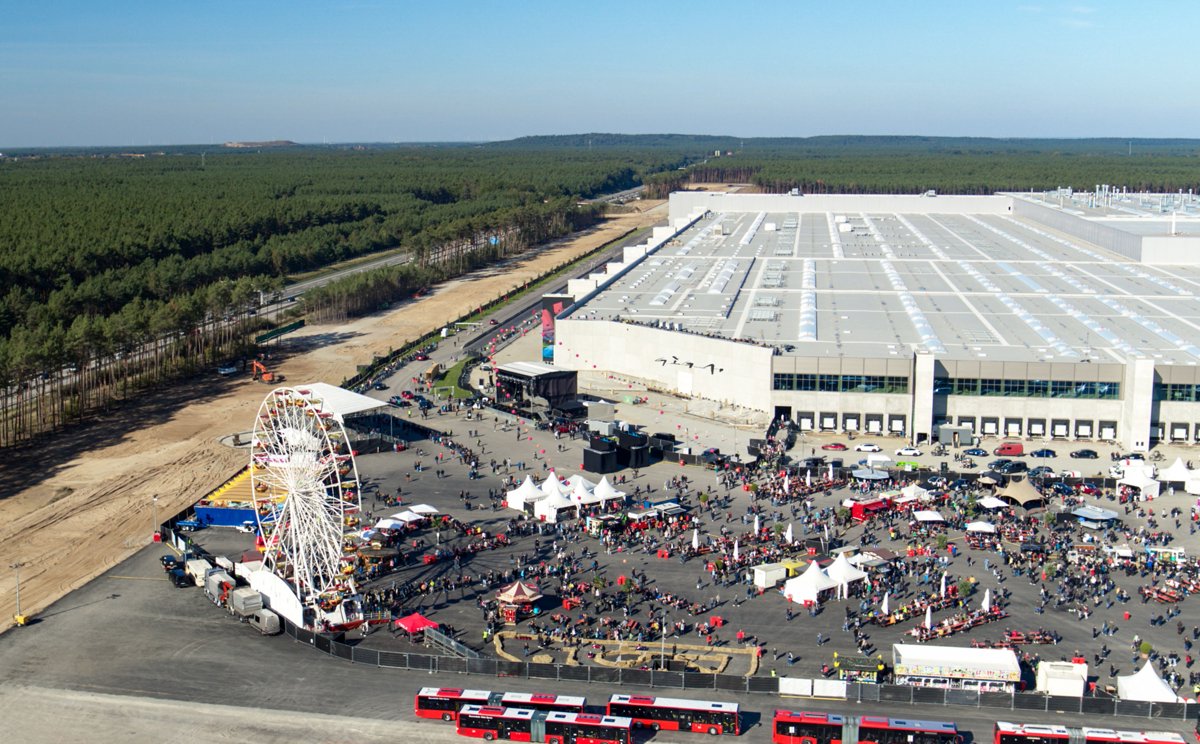
Tesla’s only European factory is at the centre of a dispute over production numbers. Reports published in early March 2026 claim Giga Berlin is operating well below its potential, while the plant’s management insists the trajectory is upward.
The Handelsblatt Report
German business newspaper Handelsblatt reported that production at the Grünheide factory dropped to approximately 149,000 Model Y units in 2025, around 30% fewer than in 2024. At an annual capacity of roughly 375,000 vehicles, this would place utilisation below 40%.
The report attributed the decline to weakening European demand for Tesla vehicles, citing the brand’s 28% registration decline across Europe in 2025 and the ongoing competitive pressure from Chinese manufacturers.
Management’s Response
Plant manager André Thierig pushed back forcefully, accusing Handelsblatt of being influenced by IG Metall, the trade union that represents many Grünheide workers. Thierig stated that production increased every quarter throughout 2025 compared to the prior quarter, and that Q1 2026 is planned to exceed Q4 2025 levels.
Tesla’s official position is that the factory has built more than 700,000 Model Y vehicles since production began in 2022 and currently produces over 5,000 units per week — equating to roughly 250,000 vehicles annually at a sustained rate.
The Labour Context
The capacity dispute arrives alongside a separate legal challenge. IG Metall filed a lawsuit in late March against the results of Giga Berlin’s works council election, alleging improper influence by Tesla’s management during the voting process. The union has been seeking greater representation at the non-unionised facility since it opened.
The factory employs approximately 11,000 people and supplies vehicles to more than 30 markets across Europe, the Middle East, and Africa.
What the Numbers Suggest
Both sides may contain elements of truth. If 2025 full-year production was indeed around 149,000 units, the weekly rate would have averaged roughly 2,900 — well below the 5,000 per week Tesla cites as the current rate. This is consistent with a factory that was running slowly for much of 2025 but ramped up significantly in Q4.
The question is whether the Q4 ramp and planned Q1 2026 increase represent a sustainable trajectory or a brief spike. With European Tesla registrations still deeply negative in most markets, the demand picture remains uncertain.
Update: 2026-04-24
Giga Berlin plant manager André Thierig has now published a Q1 2026 figure, giving the first concrete number since the Handelsblatt dispute. The factory built 61,000 Model Y units in Q1 2026, a quarterly result Thierig labelled a record. On an annualised basis this equates to approximately 244,000 units per year — below the 375,000/year nameplate capacity and consistent with the Handelsblatt narrative that 2025 was a low point, while confirming Thierig's claim of quarter-on-quarter improvement. Tesla also announced that Model Y production at Berlin will increase by a further 20% starting in July 2026, that roughly 1,000 new employees will be hired from May, and that 500 temporary workers will be converted to permanent contracts. The additions narrow the gap with nameplate capacity but do not close it.