
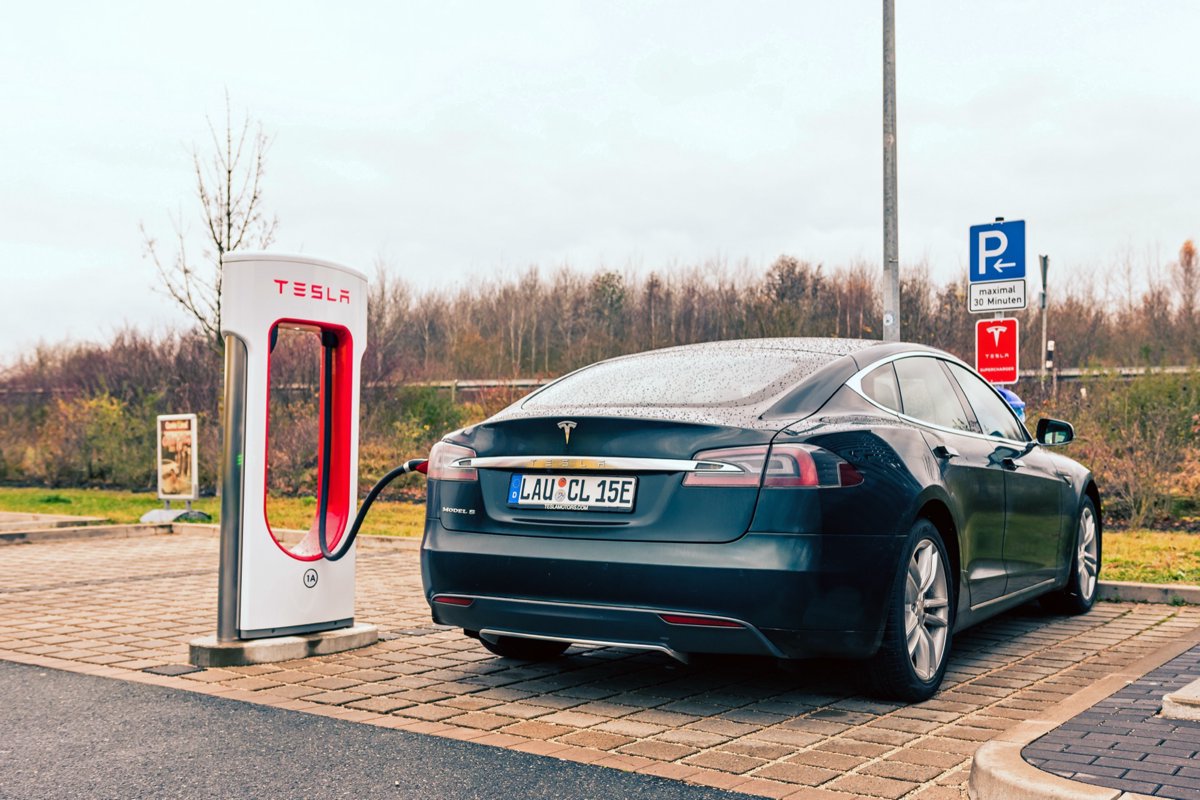
Germany has brought back federal purchase subsidies for electric vehicles, with grants of up to €6,000 available for battery electric vehicles depending on household income. The scheme runs retroactively from January 1, 2026, meaning buyers who already signed contracts or registered vehicles this year can still apply once the portal opens.
How the Tiered Subsidy Works
The programme splits buyers into three income bands, with the total subsidy stacking as income falls:
| Annual household income | BEV subsidy | PHEV/REEV subsidy |
|---|---|---|
| Over €80,000 | Not eligible | Not eligible |
| Up to €80,000 | €3,000 | €1,500 |
| Up to €60,000 | €4,000 | €2,500 |
| Up to €45,000 | €6,000 | €3,500 |
Households with children under 18 receive slightly higher income thresholds (€85,000–€90,000). PHEVs and range-extender vehicles must meet a minimum 80 km electric-only range and a maximum of 60 g CO₂/km to qualify. A three-year holding period applies to both purchases and leases.
Tesla Eligibility and Germany Edition Model Y
All battery electric vehicles are eligible with no price cap on the vehicle, which means Tesla’s entire lineup qualifies. Buyers who purchased before the portal opens in May 2026 can still claim the grant provided the vehicle was registered on or after January 1, 2026.
Tesla responded to the programme by introducing a Germany Edition Model Y, priced at €42,990 with a smaller battery pack, positioning it for buyers who want to maximise the subsidy benefit.
Scale and Budget
The programme is backed by €3 billion from Germany’s Climate Transformation Fund and is budgeted to support approximately 800,000 vehicles. The application portal is expected to go live in May 2026. Buyers do not need to wait for the portal before purchasing — registration date determines eligibility.
Used vehicles are not covered under the current scheme.
Context: Germany Reversing Course
Germany cancelled its previous “Umweltbonus” EV subsidy programme abruptly in December 2023, creating a sharp sales drop that rippled through the German EV market throughout 2024. The new programme is structurally different — income-targeted rather than universal — which the government argues directs support toward buyers for whom the EV price premium is most significant.
For Tesla owners and prospective buyers in Germany, the timing matters: combining the €6,000 maximum subsidy with available manufacturer pricing means the effective cost of entry for eligible households falls significantly below the list price.
EU Context: Germany Leading the Way
Germany is the largest car market in the European Union, and its policy decisions carry weight beyond its own borders. The reintroduction of income-targeted subsidies follows similar moves in France, where the “bonus écologique” has long been means-tested, and Spain, which has maintained purchase grants throughout the period Germany went without.
For European Tesla buyers outside Germany, the programme is a signal rather than a direct benefit — but it reinforces a broader EU trend toward targeted EV incentives as the bloc pushes toward its 2035 zero-emissions vehicle target. Several other member states are reviewing their own incentive frameworks in 2026 ahead of expected Commission guidance later in the year.
Update: 2026-05-20
On 19 May 2026 the federal application portal for the Elektroauto-Prämie went live, ending the months-long gap during which the subsidy was nominally available but impossible to claim. Applications now run through the Förderzentrale Deutschland website under the section labelled "E-Auto-Förderung des Bundesumweltministeriums". Private buyers can submit retroactively for any battery electric vehicle registered on or after 1 January 2026, subject to the income tiers and three-year holding period detailed above. Tesla confirmed via teslamag.de that all Model Y and Model 3 trims sold in Germany since the start of the year qualify.