
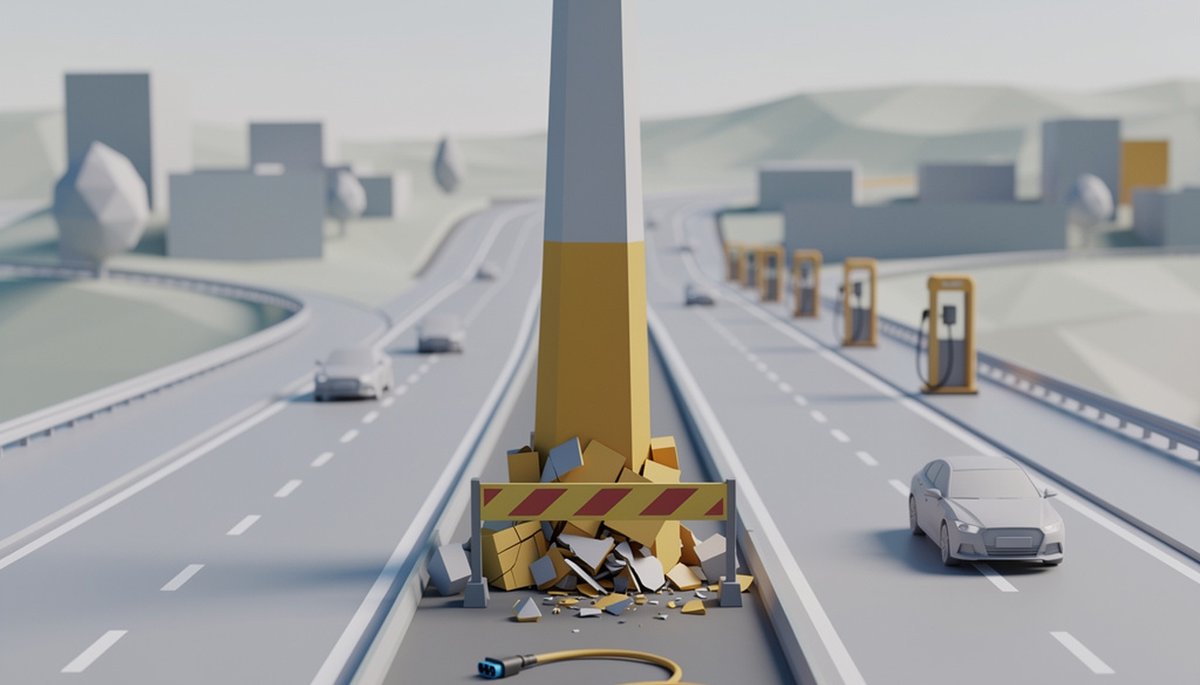
A majority in the European Parliament now backs a proposal that would let operators build fast-charging stations at motorway rest areas without first securing a building permit. It is a small procedural change with potentially large consequences for how quickly Europe's charging network — Tesla's Superchargers included — can grow.
What the Parliament is proposing
Under the plan, charging sites of up to one megawatt built on "artificial structures" — the already-paved, already-developed land at service areas and rest stops — would no longer need a separate permit before construction can begin. A megawatt is a generous ceiling: it comfortably covers a full bank of high-power stalls, so in practice most new motorway charging hubs would fall inside the exemption.
The measure is part of the wider EU Grid Package, a set of reforms aimed at modernising Europe's electricity grids and speeding up approvals for energy and charging infrastructure. The reasoning is straightforward. Permitting has become one of the slowest steps in getting new chargers into the ground, and rest-area sites on existing infrastructure carry little of the planning risk that permits are designed to manage.
Why it matters for European Tesla drivers
For European Tesla owners, the network's pace of expansion is the practical constraint on long-distance travel, and permitting delays have long been a bottleneck for every operator. Cutting the permit step for rest-area sites would directly target the locations that matter most for road trips — the motorway stops between cities — and could let Tesla stand up new V4 Supercharger hubs and expand existing ones faster than the current process allows.
It would also level the field. Tesla now opens much of its European network to non-Tesla EVs, and faster buildout benefits the whole fleet using those sites, not just Tesla drivers. A quicker route from planning to power-on is one of the few levers that helps every charging network at once.
The catch: it is not law yet
The proposal has cleared an important hurdle by winning majority support among MEPs, but that is a negotiating position, not a finished regulation. It now enters trilogue — the closed-door talks between the European Parliament, the European Commission and the member states that turn a parliamentary position into binding EU law.
On this file, Parliament has pushed its demands further than either the Commission or national governments, so the final text is likely to be watered down from the permit-free version MEPs have endorsed. Whether the one-megawatt threshold and the blanket exemption for artificial structures survive intact depends on how those negotiations land. The need for faster approvals is broadly agreed; the details are still contested.
For now, the direction of travel is clear even if the destination is not: European policymakers increasingly treat charging infrastructure as something to accelerate rather than gatekeep. If the exemption holds, the next wave of motorway Superchargers could arrive noticeably sooner.