
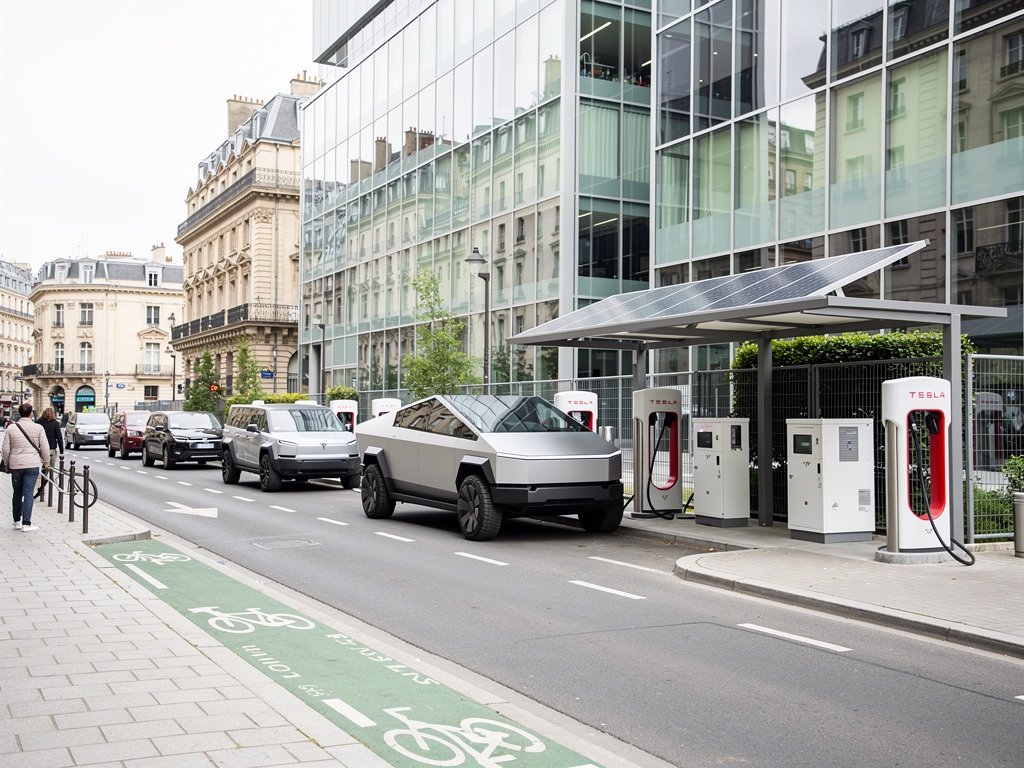
California Becomes Tesla's Second V2G State
PG&E and Tesla jointly announced on 20 April that the Tesla Cybertruck, Powershare Gateway, and Universal Wall Connector have been approved for PG&E's residential Vehicle-to-Everything (V2X) programme. The approval marks the first alternating-current (AC) vehicle-to-grid application certified for customers in California, expanding the bidirectional power capabilities Tesla launched in Texas in February 2026.
Customers enrolled in the programme can use their Cybertruck to power their home during an outage and sell stored energy back to the grid during defined grid events — the period when the utility needs additional capacity, typically summer afternoons and winter mornings. Participants earn payments when power flows out of the vehicle to the grid, adding a direct economic incentive on top of the backup-power use case.
Why AC Matters for Residential V2G
The technical detail that makes this deployment different from earlier vehicle-to-grid pilots is that it uses AC power flow rather than DC. Most prior V2G programmes — including those tied to CHAdeMO-compatible vehicles such as the Nissan Leaf — required specialised DC bidirectional chargers that cost several thousand dollars to install and are incompatible with standard residential electrical service.
Tesla's approach relies on the Cybertruck's onboard Powershare inverter, the Powershare Gateway, and a Universal Wall Connector. The hardware handles conversion between the vehicle's DC battery and the home's AC service internally, which means participation does not require a dedicated bidirectional DC charger on the garage wall. For homeowners, that significantly lowers the cost and complexity of joining a V2G programme.
What the Programme Enables
For PG&E customers who own a Cybertruck, the programme delivers three practical capabilities:
- Backup power during outages — the Cybertruck's battery can power a home for several days, depending on load.
- Grid-event exports — the utility can draw energy from the vehicle during peak demand and pay the owner for each kilowatt-hour exported.
- Self-consumption optimisation — solar-powered homes can charge the Cybertruck during the day and discharge it in the evening to reduce grid imports.
PG&E has not yet disclosed the per-kWh payment rate for grid exports, but the utility's existing residential battery programmes pay between $2 and $3 per kWh during declared grid events, substantially above wholesale prices. Customers must complete a separate enrolment step to participate in the paid-export side of the programme.
European Implications
The Cybertruck itself is not sold in Europe — it lacks EU type approval and there are no plans to homologate the current design — so direct access to this programme remains out of reach for European readers. However, the precedent it sets is relevant.
Tesla's Powershare architecture will eventually migrate to Model 3, Model Y, and Model S/X hardware variants, and the company has publicly described V2G as a goal for the broader fleet. European grid operators — particularly in Germany, the Netherlands, and the UK — have been running V2G pilots for several years, mostly with Renault, Volkswagen, and Nissan vehicles. A Tesla fleet with native bidirectional capability would be a significant addition, and the California launch demonstrates that Tesla has the hardware and software chain working end-to-end in a regulated utility environment.
The more immediate takeaway for European Tesla owners is that the necessary upstream components — an inverter-capable vehicle, a bidirectional gateway, and a compatible wall connector — are now in production and certified. The remaining gaps for Europe are regulatory (national grid codes, EV homologation) and commercial (utility tariffs that value exported energy properly).