
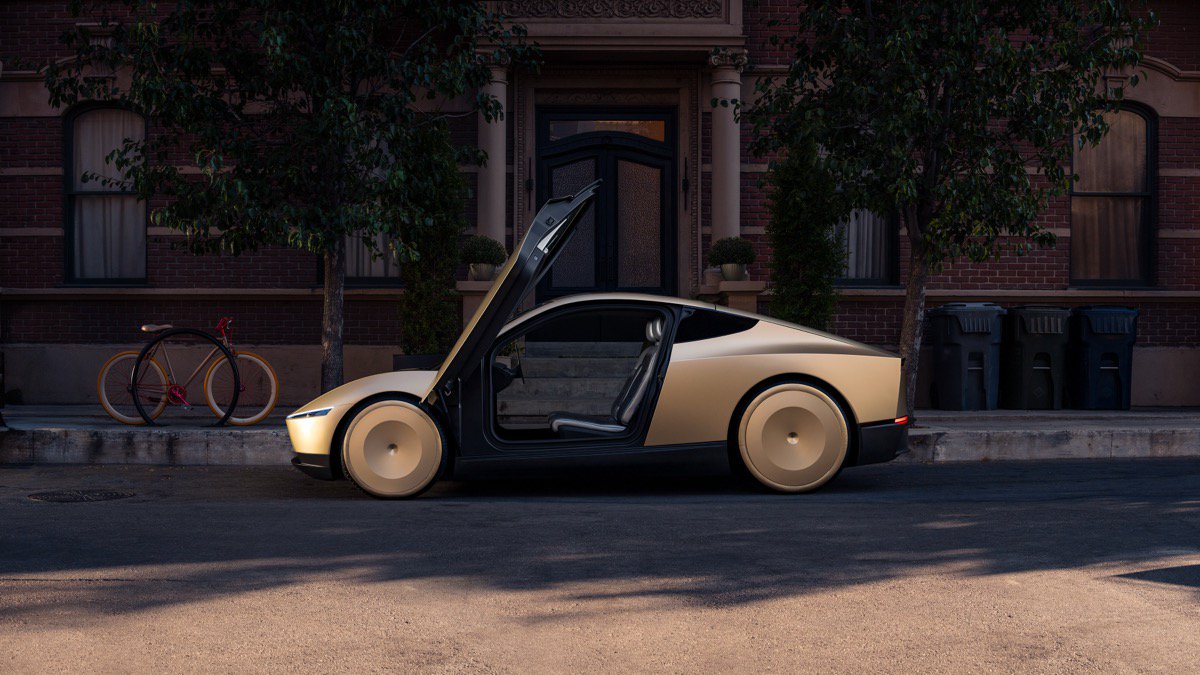
Tesla's Cybercab moved one step closer to reality in February when the US Federal Communications Commission granted a crucial waiver for its wireless charging technology.
What the FCC Approved
The waiver, issued on 18 February 2026, allows Tesla to use ultra-wideband (UWB) radio technology in fixed outdoor charging equipment. Under normal FCC rules, UWB devices must be handheld and cannot be permanently installed on outdoor infrastructure. Since Tesla's wireless charging pads will be mounted on the ground at driveways or charging hubs, a specific exemption was required.
The FCC concluded that the system is low-power, activates only briefly during vehicle parking, and operates at very short range — making interference with other systems unlikely.
How It Works
The system uses peer-to-peer communication between a UWB transceiver on the Cybercab and a matching transceiver on a ground-level charging pad. This enables precise vehicle positioning over the inductive coil, which is essential for efficient wireless power transfer.
For an autonomous vehicle like the Cybercab, which is designed to operate without a driver, manual plug-in charging is not an option. The vehicle must be able to park itself with centimetre-level accuracy over a charging pad and begin charging without any human interaction.
Why It Matters for Europe
The FCC waiver applies only to the United States. European deployment would require equivalent approval from national regulators under the EU's Radio Equipment Directive and ETSI standards for UWB devices. However, the US approval establishes a precedent and validates the technical approach.
Wireless charging infrastructure is also advancing independently in Europe. Several European cities are piloting inductive charging for buses and taxis, creating regulatory pathways that Tesla could leverage when the Cybercab eventually reaches EU markets.
The Bigger Picture
The Cybercab is Tesla's purpose-built autonomous vehicle, announced alongside plans for production beginning in 2026 at Gigafactory Austin. The two-seat vehicle has no steering wheel or pedals, relying entirely on Tesla's Full Self-Driving system.
Clearing the FCC wireless charging hurdle removes one of many regulatory prerequisites for commercial deployment. The larger challenges — FSD regulatory approval in each jurisdiction, insurance frameworks, and infrastructure buildout — remain ahead.