
A four-minute fast charge — on paper
At its annual Tech Day on April 21, 2026, CATL revealed the third generation of its Shenxing lithium iron phosphate (LFP) battery, claiming charging speeds that would beat anything in current production EVs, including Tesla's own Standard Range packs. According to coverage by NotATeslaApp, InsideEVs and CarNewsChina, the new pack has the following published specifications.
| Metric | Shenxing Gen 3 | Industry context |
|---|---|---|
| 10–35% charge | 1 minute | — |
| 10–80% charge | 3 min 44 sec | BYD Blade 2.0: ~9 min |
| 10–98% charge | 6 min 27 sec | Geely Shield Gold: 8 min 42 sec |
| Cold-weather (10–98% at -30°C) | 9 minutes | Industry: 30+ minutes |
| Internal resistance | 0.25 milliohm | ~50% below industry average |
| Cycle life at ultra-fast charging | 1,000+ cycles at 90% capacity | Standard LFP target |
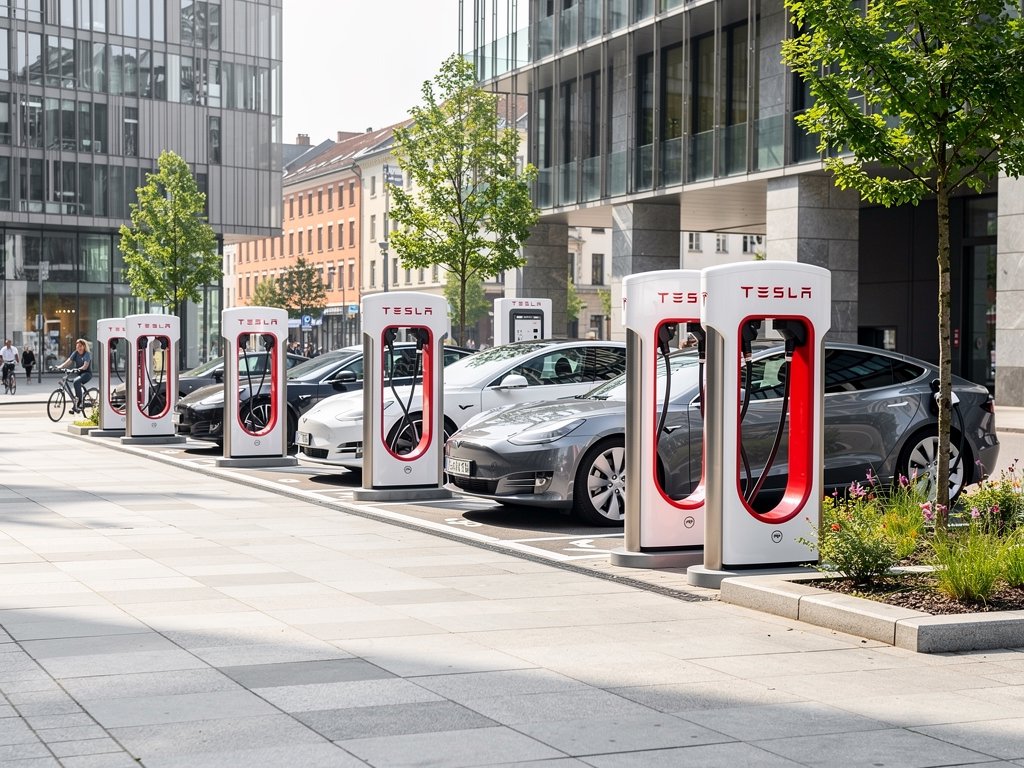
The published peak C-rate is 15C, with sustained 10C charging — well above what Tesla's existing Supercharger V4 hardware can deliver per stall (1.2 MW peak across the cabinet). To reach the headline numbers in real-world conditions, the pack and the charger both have to scale up.
What it means for Tesla and European drivers
CATL is one of Tesla's two main LFP cell suppliers, alongside BYD, and provides the LFP cells used in Tesla's Standard Range Model 3 and Model Y vehicles built in China and Berlin. Tesla also adopted CATL's Qilin (NMC, structural pack) generation for some Model Y configurations. A jump in the Shenxing line could feed directly into Tesla's next Standard Range refresh, particularly for European builds that currently use Berlin-assembled cells from CATL's German JV.
The specifications also matter for Megacharger scaling. Tesla Semi already supports 1.2 MW pulse charging using a different chemistry, but Shenxing Gen 3's combination of low internal resistance and cold-weather performance is the more immediately relevant breakthrough for European passenger cars: the pain point in Norway, Sweden and the Alps has always been winter charging speed, where Tesla's LFP cars currently slow dramatically below freezing.
When it actually ships
CATL has not published a launch vehicle or a production volume target for the third-generation Shenxing cell. Two prior generations of Shenxing rolled out roughly 12 to 18 months after announcement — first into Chinese EVs, then into European-market vehicles a year later. On that pattern, drivers in the EU would not see Shenxing Gen 3 in a showroom Tesla Model 3 or Model Y before late 2027 at the earliest.
The other open question is whether existing Supercharger V4 stalls will support the peak rates Shenxing Gen 3 enables. V4 hardware tops out at 1.2 MW per cabinet with 500 kW per stall — enough to come close to the published 4-minute target only on the smallest 60 kWh packs. A larger Long Range pack at the same C-rate would still need a megawatt-class charger to fully exploit it, which is one reason CATL's announcement also reset expectations for next-generation public charging hardware in Europe.