
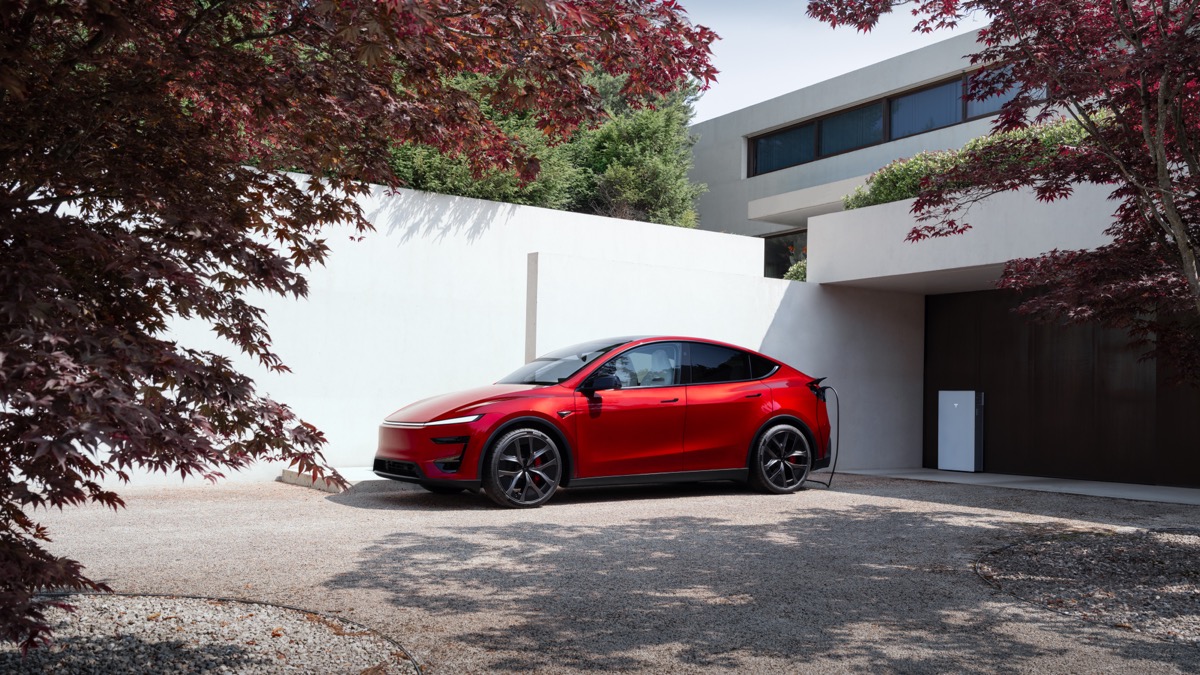
Tesla's earliest software treated Superchargers as the only charging infrastructure that mattered. Between 2021 and 2024, a series of software updates gradually broadened the vehicle's relationship with the charging ecosystem, reflecting the reality that Tesla owners increasingly charge on mixed networks.
Co se změnilo
The evolution came through incremental updates rather than a single release:
| Version | Date | Charging Feature |
|---|---|---|
| 2022.8 | Mar 2022 | Improved charging time estimation |
| 2022.36 | Sep 2022 | Supercharger occupancy and fee data |
| 2023.38 | Oct 2023 | Predictive Supercharger availability and wait times |
| 2024.8 | Mar 2024 | One-Time Charge Limit |
| 2024.44 | Nov 2024 | Trailer-Friendly Supercharger filtering |
Each update addressed a specific friction point. Charging time estimation in 2022.8 gave owners realistic expectations instead of optimistic projections. Supercharger occupancy data in 2022.36 showed historical usage patterns and fees before arrival. Predictive availability in 2023.38 forecast wait times by tracking other Tesla vehicles en route to the same station.
Jednorázový limit nabíjení
Version 2024.8 introduced a deceptively simple feature: a one-time charge limit override. Tesla recommends daily charging to 80% for battery longevity, but road trips require 100%. Previously, raising the limit meant remembering to lower it afterward. The one-time option automatically reverts after a single charge session, protecting the battery while accommodating occasional full charges.
Superchargery pro přívěsy
The 2024.44 update addressed European caravan and trailer owners directly. The navigation map now identifies Supercharger stalls with enough space for vehicles towing trailers. When Trailer Mode is active, these locations appear prioritised in search results. Across Europe's holiday corridors, this removed the guesswork of finding accessible stalls.
Dopad na evropské majitele
Europe's charging landscape is more fragmented than North America's. Tesla owners regularly use Ionity, Fastned, Allego, and national networks alongside Superchargers. The shift toward charger-agnostic software was essential for European relevance.
Supercharger occupancy data proved especially valuable on busy European corridors like the A7 (France), E45 (Germany-Denmark), and A1 (Netherlands). Predictive availability reduced the frustration of arriving at a full station during holiday travel.
Kontext
This evolution continued in 2025 with third-party fast charger preconditioning (2025.2), which extended battery warming beyond the Tesla network. The trend was clear: Tesla's software was catching up with the reality that its owners charge wherever is convenient, not just at Superchargers.