
A Long-Awaited Charging Queue Lands in the App
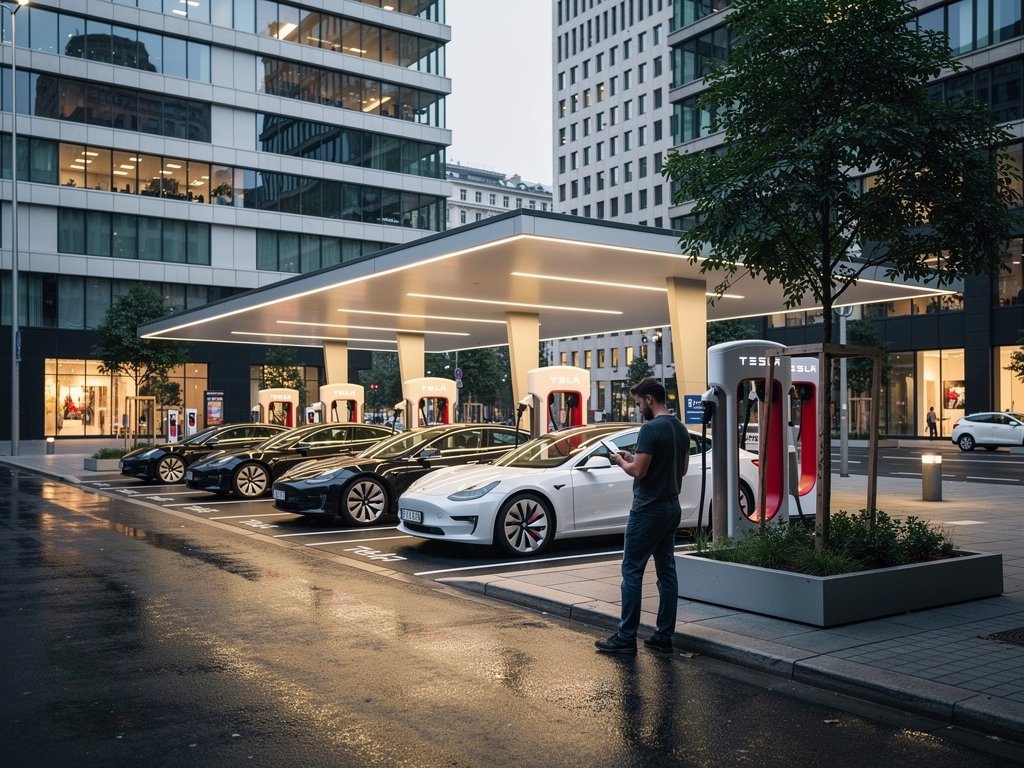
Tesla has rolled out version 4.56.0 of its mobile app, delivering one of the most-requested features for owners who travel during peak periods: a Virtual Supercharger Queue. The system uses geofenced waitlists with live tracking, allowing drivers to claim a spot in line as they approach a busy site rather than circling the parking lot waiting for a stall to free up.
The release notes highlight three pillars: Virtual Supercharger Queues, Ownership Transfer V2, and a Notified If Earlier Appointment Becomes Available toggle for service bookings. Each addresses a friction point that has built up over years of network growth and rising fleet density.
How the Virtual Queue Works
When a Supercharger site is at or near capacity, the app surfaces a queue option. Drivers add themselves to the waitlist before arriving, and the system tracks their position in real time. The geofence ensures only nearby vehicles can claim a spot, preventing remote queue-jumping.
Crucially, the feature works for both Tesla vehicles and non-Tesla EVs using the NACS connector. That matters because Magic Dock and NACS adoption has rapidly expanded the pool of cars sharing the network across North America, and Europe is following with V4 site retrofits. Without a queue, peak-time congestion at popular corridor stops has produced ad-hoc lines on the asphalt — exactly the kind of experience Tesla has long argued does not happen at Superchargers.
The queue does not reserve a stall in advance. A driver still pulls in normally once they reach the front. What changes is the visibility: instead of guessing how long the wait will be, owners see a live position and an estimated time, and they can wait inside their car or at a nearby store rather than blocking the lot.
Earlier-Appointment Alerts for Service
The second headline feature targets a different pain point: long lead times for service appointments. With version 4.56, owners can opt in to be notified if an earlier slot opens at their selected service centre. Until now, the only workaround was to refresh the booking screen manually for days at a time.
For European owners in particular, where service-centre density is lower than in North America and lead times occasionally stretch past a month, the alert could meaningfully shorten the gap between booking and repair.
Ownership Transfer V2 and What's Next
Version 4.56 also introduces Ownership Transfer V2, which Tesla describes as seamless and fully native for both vehicles and solar systems. Previous transfers required dealer-style paperwork or in-app workflows that broke for certain configurations. The redesigned flow handles vehicle, solar, and Powerwall handover from a single screen, including the migration of Supercharging history and FSD entitlement where applicable.
A decompiled look at the build also revealed in-app payment scaffolding, suggesting Tesla is preparing infrastructure for future paid features delivered through the app rather than the car.
The rollout is staggered, as is typical for Tesla app releases. Owners should see the update prompt in the App Store or Google Play Store within the next few days, with the new features lighting up automatically once the app is installed and the vehicle is online.
Update: 2026-05-12
On 11 May 2026, Tesla activated the Virtual Supercharger Queue as a live pilot at five sites — Los Gatos, Mountain View and San Francisco in California, plus San Jose, California and East Gun Hill Road in the Bronx, New York (Teslarati, TeslaNorth, Drive Tesla Canada). Drivers who navigate to one of the pilot stations are now auto-enrolled in the waitlist on the touchscreen, with a live position number and estimated wait time. Non-Tesla EVs can join the same queue through the Tesla app. Tesla is asking pilot users for in-app feedback before deciding on a wider rollout — including to congested European corridor stations, where the queue first described in the 4.56 release notes has not yet appeared in practice.